




First Time Flying Tips From Check-In to Landing

The easiest way to handle a first flight is to follow the airport process in order. Check in before leaving home, complete the airline and security procedures at the airport, follow the crew during the flight, and use the correct arrival route after landing. The airline sets baggage and boarding rules. TSA controls checkpoint screening, while FAA guidance covers batteries and cabin safety.
First Time Flying Tips Before Leaving Home
Problems with identification, baggage, or restricted items are easier to solve at home. Complete these checks before traveling to the airport so the remaining steps follow a clear order.
Match the Ticket to Your Travel Document
Adults age 18 or older need acceptable identification at a U.S. checkpoint. International air travel normally requires a passport book. The name on the booking should match the identification you plan to use. Contact the airline before departure if you find a spelling error or missing part of your name.
Check In and Save the Boarding Pass
Online check-in often opens about 24 hours before departure, but the airline sets the actual time. Use its website or app to confirm your seat and receive the boarding pass.
Save the pass to your phone wallet and take a screenshot that works without internet access. A kiosk or airline agent can print a paper version at the airport if the app does not issue one.
Confirm the Airline Baggage Rules
Your fare determines whether a carry-on, personal item, or checked bag is included. Basic economy fares may also have stricter cabin baggage rules.
Check the airline’s dimensions and weight limits for every airline on the itinerary before choosing a suitcase. A bag accepted by the first carrier may exceed a connecting airline’s limit.
Measure and Pack the Case
Measure the packed bag, including its wheels and fixed handles. Exterior pockets or an expanded compartment should also be included when filling.
Weigh the case after packing, when the airline publishes a limit. Leave some unused space so the shell closes without pressure and the bag is easier to lift.
A case with raised handle rails can make clothing sit unevenly. Filling the spaces around those rails often leads to extra items and a heavier load.
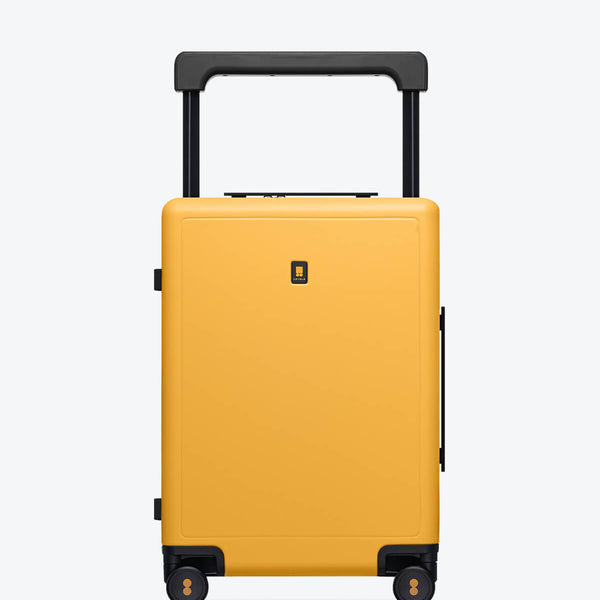
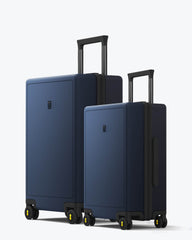
The Voyageur Carry-On 20-inch uses a wide handle layout to create a flatter packing base. Its compression system holds clothing in place, while the wet and dry pocket separates damp items. The case provides 43 liters of capacity and measures 21.3 by 15.1 by 9.8 inches to meet your trip needs.
Keep Essential Items in the Cabin
Identification and medicine should remain with you. Keep keys and other difficult-to-replace belongings in the cabin as well.
Power banks and spare lithium batteries must travel in carry-on baggage. Batteries up to 100 watt-hours are normally allowed. Batteries from 101 through 160 watt-hours require airline approval.
The best carry-on bag for a first flight provides access to anything needed during security or boarding.
First Time Flying Tips at the Airport
The airport process begins with the airline and continues through security to the departure gate. Passengers who already have a boarding pass and carry only cabin baggage may usually go directly to security.
Arrive With Enough Processing Time
Two hours before a domestic departure and three hours before an international departure are useful planning buffers. Follow a longer time when the airline or airport recommends one.
Add time when you need parking, mobility assistance, or an international document check.
|
Check before leaving |
What to confirm |
Where to verify it |
|
Departure airport |
Airport code and terminal |
Airline app |
|
Check-in status |
Boarding pass issued |
Airline account |
|
Checked baggage |
Bag-drop closing time |
Airline baggage page |
|
Identification |
Document accepted |
TSA website |
Check In and Drop Off Checked Bags
Find the airline’s name in the departure or ticketing area. Place the checked bag on the airline scale. A kiosk can often print the boarding pass and baggage tag, though an agent may need to check international documents.
Read the destination code printed on the baggage tag before the bag leaves the counter. On a connecting trip, ask where the case must be collected. Some bags continue to the final airport automatically. Certain international arrivals require passengers to collect their bags for customs.
Keep the baggage receipt because its number is linked to the checked case. A photo of the receipt creates a backup if the paper is lost.
For trips that need both cabin and checked sizes, luggage sets can provide a consistent packing layout. Each piece still needs to be checked separately against the airline’s dimensions and weight limit.
Complete Personal and Carry-On Screening
Airport security screens both the passenger and anything entering the cabin. Have your accepted ID ready at the document station.
Standard screening may require you to remove shoes and a jacket. Empty your pockets into the carry-on before entering the metal detector or body scanner.
The standard TSA liquid rule allows containers of no more than 3.4 fluid ounces or 100 milliliters. They must fit inside one clear, quart-size resealable bag. Medically necessary liquids and some child nourishment may qualify for exceptions.
Container capacity controls the decision. A partly empty six-ounce bottle still exceeds the standard limit.
Instructions can differ by lane because airports use different equipment. Follow the signs and the TSA officer.
Remove Electronics When Directed
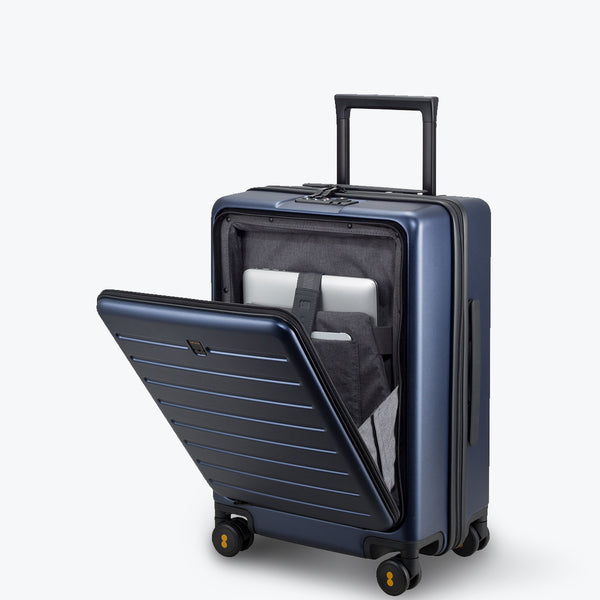
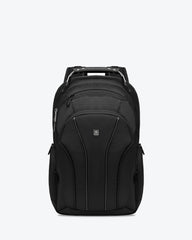
Standard screening may require electronics larger than a phone to be placed separately in a bin. A laptop buried under clothing can force you to unpack beside the belt. The Road Runner Carry-On 20 inch addresses this problem with an exterior section that fits a 17-inch laptop and a 10.9-inch tablet. The pocket allows the device to be removed without opening the clothing compartment.
Wait until every bin and bag has cleared the scanner. Move to the repacking bench before returning liquids and electronics to the case.
Find the Gate and Check the Flight
Match the flight number and destination on an airport display with the boarding pass. The airline app may send alerts, but the airport display and gate staff reflect the current operation.
Use the boarding time on the pass and stay close enough to hear announcements. The departure time is when the aircraft is scheduled to leave. Boarding begins earlier and may close before the printed departure time.
Airline deadlines vary, so the carrier’s stated cutoff governs your booking.
Board With the Correct Group
Airlines board passengers by group or zone. The assigned group appears on the boarding pass. Wait until that group is called before joining the line. Keep the pass open for scanning and have the required travel document available on an international route.
Limited overhead space may cause the airline to check some cabin bags at the gate. Ask whether the case will be sent to baggage claim or returned beside the aircraft.
First Time Flying Tips During and After the Flight
Cabin crew instructions take priority over general travel advice. Listen to the safety demonstration and ask a flight attendant when an unfamiliar sound or physical feeling causes concern. After landing, remain seated until the aircraft reaches its gate.
Follow the Takeoff Instructions
Fasten the seat belt and secure the tray table. Put the phone in airplane mode before the aircraft leaves the gate.
Taxiing can include stops and changes in engine power. The landing gear may create a noticeable sound shortly after takeoff. These actions are part of normal aircraft operation.
Cabin pressure changes during the climb. Swallowing or yawning may help equalize pressure in the ears.
Stay Safe During the Flight
Turbulence is air movement that may begin without warning. The FAA advises passengers to keep the belt fastened whenever seated. Wear the belt low and snug over the hips. Do not stand to retrieve a bag while the seat belt sign is on.
Keep drinks and loose devices secure if the ride becomes rough. Tell a flight attendant immediately if an electronic device becomes unusually hot or begins smoking.
Prepare for Descent and Landing
Use the restroom before the seat belt sign comes on, when possible. Return loose items to the bag and secure the tray table when requested.
Ear pressure can return during descent. Tell the crew if you experience severe pain or feel unwell.
Passengers with a connection should note the next flight number. Wait until landing to confirm the gate because assignments may change while the aircraft is in the air.
Leave the Aircraft With All Your Property
Remain seated until the seat belt sign turns off. The aircraft may continue moving after it reaches the runway.
Passengers normally exit by row. Wait until the row ahead has cleared before entering the aisle. For a connection, check the next gate before following any exit sign. International transfers may require immigration or another security check.
Collect Checked Baggage
At the final destination, follow signs for baggage claim. Passengers without checked luggage may continue toward the exit or ground transportation.
Arrival displays list the flight number beside a carousel or belt number. Go to that belt and compare the luggage tag before taking a case that resembles yours.
Bags may take time to appear after passengers reach the claim area. Do not leave while the flight’s luggage is still being delivered.

FAQ
Can I Use a Mobile Boarding Pass?
Yes, when the airline and airport accept it. Save it offline and keep the phone charged. A kiosk or airline agent can print a paper pass if needed.
Do I Need TSA PreCheck for a First Flight?
No. Standard screening is available to eligible passengers. TSA PreCheck may shorten future screening, but enrollment is not required to fly.
Can I Bring Food Through Airport Security?
Yes, most solid food is allowed. Spreadable food may follow the liquid rule. Search for the exact item in TSA’s What Can I Bring database.
What If I Forget My Identification?
Tell a TSA officer immediately. TSA may attempt to confirm your identity and require additional screening.
Can I Change My Seat at the Gate?
Sometimes. Ask the gate agent before boarding. Approval depends on seat availability and the airline’s operating requirements.
Summary
A first flight becomes easier when every action follows the travel order. Prepare the documents and baggage at home, complete the airline and security procedures at the airport, and board only when your group is called.
During the flight, follow the crew and remain belted while seated. After landing, take the connection route or continue to baggage claim. Report missing luggage before leaving the claim area, then follow the signs to the correct airport exit.

Leave a comment