



Table of Content
Can I Bring a Portable Charger in My Carry-On?

Yes. Portable chargers (power banks) are allowed in carry-on luggage on most flights, but they are not permitted in checked luggage. Airlines and aviation authorities require lithium batteries to stay in the cabin so that any potential battery overheating or fire can be detected and handled quickly.
As long as your power bank meets airline battery limits and is packed in your carry-on bag or personal item, you can usually bring it on board without issues. Understanding the battery capacity limits and airline safety rules will help ensure smooth travel.
Why Are Portable Chargers Not Allowed in Checked Luggage?
Portable chargers contain lithium-ion batteries, which airlines classify as potentially hazardous when stored in cargo holds. For this reason, aviation safety rules require them to stay in the passenger cabin rather than inside checked luggage.
Lithium Battery Fire Risk
Lithium batteries can occasionally overheat due to manufacturing defects, damage, or internal short circuits. When this happens, the battery may enter a process called thermal runaway, which can lead to smoke or fire.
Although these incidents are rare, the risk increases when batteries are stored in cargo holds, where they are difficult to monitor.
Why Airlines Require Batteries in the Cabin
Airlines require passengers to keep power banks in carry-on luggage or personal items so that any issues can be detected quickly. If a battery begins to overheat, passengers or crew members can respond immediately and follow safety procedures.
This rule helps reduce potential risks during flights and ensures that lithium batteries remain within reach of trained cabin crew.
How Flight Crews Handle Battery Emergencies
Cabin crews are trained to handle battery-related incidents. If a power bank overheats or produces smoke, the crew can isolate the device and use specialized fire containment equipment.
Because these procedures rely on quick detection and access, lithium batteries must remain in the passenger cabin rather than inside checked suitcases.
What Size Portable Charger Is Allowed on a Plane?
Airline rules for portable chargers are usually based on watt-hours (Wh), which measure battery capacity. Most airlines follow international aviation safety guidelines.
|
Battery Capacity |
Allowed on Plane |
Notes |
|
Under 100Wh |
Yes |
Allowed in carry-on bags without airline approval |
|
100Wh – 160Wh |
Usually yes |
Airline approval may be required |
|
Over 160Wh |
No |
Not allowed on passenger aircraft |
These limits follow international aviation safety guidelines used by organizations such as the International Air Transport Association (IATA), which many airlines adopt worldwide.
Power Banks Under 100Wh
Portable chargers under 100Wh are generally allowed in carry on luggage without special approval.
Most common travel power banks fall into this category, including many 10,000mAh or 20,000mAh models. These devices are widely accepted on flights as long as they are packed in your carry-on suitcase or travel bag.
Power Banks Between 100Wh and 160Wh
Power banks between 100Wh and 160Wh may still be allowed, but they often require airline approval before the flight.
These higher-capacity chargers are less common and are typically used for professional equipment or long trips.
Power Banks Over 160Wh
Portable chargers over 160Wh are generally prohibited on passenger aircraft. These batteries are considered too large to carry in either checked luggage or carry-on bags.

How to Convert mAh to Wh for Airline Battery Limits?
Many power banks list capacity in milliamp hours (mAh) instead of watt-hours (Wh). However, airline safety rules use Wh to determine whether a battery is allowed on a flight.
You can convert mAh to Wh using the following formula:
Wh = (mAh × Voltage) ÷ 1000
Most portable chargers use 3.7V lithium-ion batteries, which is the standard voltage for power banks.
Example Conversions
-
10,000mAh power bank
(10,000 × 3.7) ÷ 1000 = 37Wh
-
20,000mAh power bank
(20,000 × 3.7) ÷ 1000 = 74Wh
Both examples fall well below the 100Wh airline limit, which is why these sizes are commonly allowed in carry-on luggage or personal travel bags.
Common Power Bank Sizes and Airline Limits
|
Power Bank Capacity |
Approximate Wh |
Flight Allowed |
|
5,000mAh |
~18Wh |
Yes |
|
10,000mAh |
~37Wh |
Yes |
|
20,000mAh |
~74Wh |
Yes |
|
30,000mAh |
~111Wh |
Airline approval may be required |
This table shows why 10,000mAh and 20,000mAh portable chargers are the most travel-friendly options, while larger batteries may require airline approval.
How Many Portable Chargers Can You Bring on a Plane?
Most airlines allow passengers to bring multiple portable chargers in carry-on luggage, as long as each battery is under 100Wh.
Portable Charger Quantity Rules on Flights
|
Battery Capacity |
Quantity Allowed |
Notes |
|---|---|---|
|
Under 100Wh |
Usually multiple |
Must be in carry-on or personal item |
|
100Wh – 160Wh |
Usually up to 2 |
Airline approval required |
|
Over 160Wh |
Not allowed |
Prohibited on passenger aircraft |
However, aviation safety guidelines generally recommend carrying no more than two spare batteries between 100Wh and 160Wh, and these may require airline approval before the flight. Smaller power banks under 100Wh are typically not subject to strict quantity limits, although airlines may still impose practical restrictions.
To avoid delays during airport screening, keep all portable chargers in your carry-on luggage or personal travel bag, rather than placing them in checked baggage.
How to Check If Your Power Bank Is Flight-Approved
Before traveling, it is important to confirm whether your portable charger meets airline battery rules. A quick check of the battery capacity, device labeling, and airline policies can help prevent delays during airport security screening.

Check the Battery Capacity (Wh)
The most important factor is the battery’s watt-hour (Wh) rating. Airlines typically allow portable chargers under 100Wh in carry-on luggage.
Look for the Wh value printed on the power bank. If it is not listed, you can estimate it using the mAh to Wh conversion formula explained earlier.
Look for Clear Manufacturer Information
Most legitimate power banks include a label showing the battery capacity, voltage, and model information. Airport security may check this information to confirm that the device meets aviation safety guidelines.
If the battery capacity is not clearly labeled, airport security may restrict the device because they cannot verify its size.
Check Airline and Airport Security Policies
Although most airlines follow similar lithium battery rules, some airlines may have specific limits or approval requirements for larger batteries.
Before flying, review your airline’s official battery policy or travel guidelines to make sure your portable charger meets their requirements.
Tips for Traveling With a Portable Charger on Flights
Following a few basic precautions can help ensure your portable charger travels safely.
Keep Power Banks in Carry-On Bags
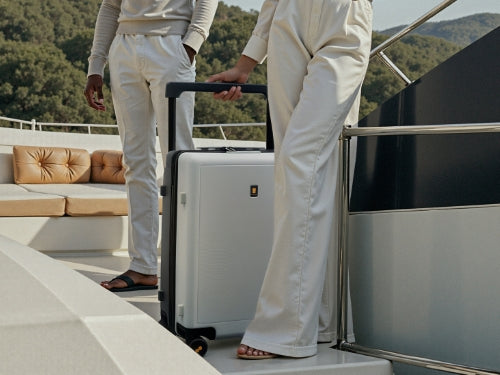
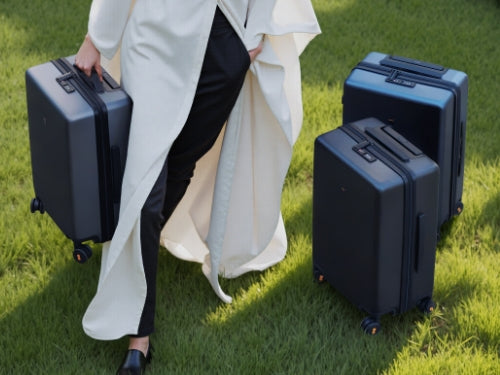
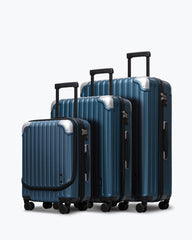
Always place portable chargers in carry-on luggage or personal bags rather than checked baggage. This follows airline safety regulations and allows easier monitoring during flights. For travelers who want faster access to electronics during airport screening, top opening carry on luggage can make it easier to reach frequently used items without fully opening the suitcase.
For example, many travelers keep their power banks inside a structured carry-on suitcase such as the Voyageur Carry-On 20'', which provides organized compartments and easy access to travel electronics during security checks and boarding.
Protect Battery Terminals
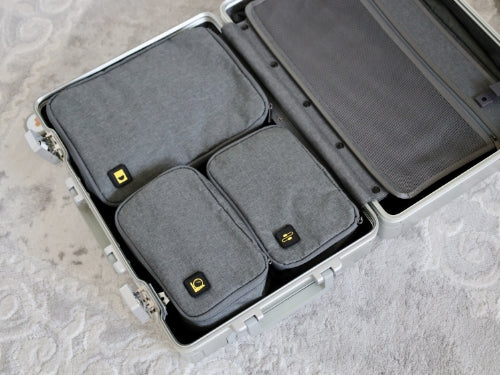
To prevent short circuits, avoid letting battery terminals touch metal objects. Keeping power banks in protective pouches or separate compartments inside your travel bag can help prevent damage while keeping charging accessories organized.
A durable carry-on suitcase can also help protect electronic accessories during travel. For example, the Luminous Textured Carry-On 18''/20'' features a strong polycarbonate shell and organized interior compartments, making it easier to store power banks, charging cables, and other travel electronics safely.
Avoid Charging Power Banks During Flights8
Some airlines discourage charging portable chargers during flights because overheating may occur if the device is damaged or defective.
Follow Airline Safety Instructions
If a flight crew member asks you to store or stop using a device, follow their instructions immediately. Cabin crews are trained to manage potential battery risks and maintain passenger safety.
Conclusion
Yes, you can bring a portable charger on a plane, but it must be placed in carry-on luggage or a personal item rather than checked baggage. Most portable chargers under 100Wh are allowed without airline approval, while batteries between 100Wh and 160Wh may require airline permission, and larger batteries are generally not permitted on passenger flights.
Checking your power bank’s battery capacity and following airline battery rules can help ensure smooth airport screening and safe travel.
FAQ
Can I bring a portable charger in my personal item instead of a carry-on?
Yes. Portable chargers can be stored in either a personal item or carry-on luggage as long as they remain in the passenger cabin. They should not be packed inside checked suitcases.
Is a 20000mAh power bank allowed on a plane?
In most cases, yes. A typical 20,000mAh power bank equals about 74Wh, which is below the 100Wh limit used by most airlines.
What happens if you accidentally pack a power bank in checked luggage?
Airport security may remove the power bank during baggage screening. In some cases, the airline may delay or inspect the luggage before allowing it on the aircraft.
Can I bring a portable charger with built-in cables on a plane?
Yes. Portable chargers with built-in cables are usually allowed on planes as long as they meet the airline’s battery capacity limits and are packed in carry-on luggage.

Leave a comment