




Table of Content
How to Reset a Luggage Lock: Step-by-Step Instructions

Most luggage locks can be reset in a few minutes, but only when the lock is open and set to its current combination. Enter the existing code, activate the reset button or switch, choose a new three-digit number, and release the reset mechanism to save it.
That process changes a known combination. It does not erase a forgotten code from a locked suitcase. If you cannot open the lock, start with alignment and pressure checks before attempting recovery or contacting a repair service.
Before You Reset the Lock
Do not insert the zipper pulls or close a frame-style suitcase until the new combination has been tested. Keeping the bag open prevents a small setting error from becoming a lockout.
First, identify the lock mechanism. Most luggage uses one of four designs:
- A recessed reset button beside the number wheels
- A sliding reset switch on the side or bottom
- A rotatable shackle on a separate combination padlock
- One or two combination latches on a zipperless frame case
If the lock has never been customized, try the factory setting, which is commonly 0-0-0. Center each number on the indicator line rather than leaving a wheel between digits. You may also need a ballpoint pen to reach a recessed button, but avoid knives, screwdrivers, or anything likely to damage the lock housing.
The reset direction can vary even when two locks look similar. Check the instructions for the exact suitcase model whenever they are available.
How to Reset a Built-In Luggage Lock
A conventional built-in TSA combination lock usually secures two zipper pulls. Once you can open it with the current code, the following sequence applies to many models.
Step 1: Enter the Current Combination
Turn the three wheels to the existing combination. On a new suitcase, begin with 0-0-0 unless the product instructions specify another default.
Operate the release button and confirm that the zipper pulls come free. This check matters because most reset controls will not work unless the internal mechanism recognizes the correct code.
If the release feels unusually stiff, push the zipper pulls gently toward the lock while operating it. An overpacked suitcase can pull the zipper heads outward and place pressure on the locking mechanism.
Step 2: Engage the Reset Mechanism
Look beside or beneath the number wheels for a small button, pinhole, or switch. A recessed button may require the end of a ballpoint pen. Press it completely; depending on the design, it may remain down after a click or need to be held throughout the next step.
A sliding switch usually moves toward an arrow or a position marked “SET.” Do not force a component that does not move with light, controlled pressure. What appears to be a reset switch may actually be the release button.
For visual reference, LEVEL8’s guide to opening different TSA lock designs shows why the position and movement of the controls can differ between suitcase models.
Step 3: Choose the New Combination
With the reset control engaged, turn the wheels to the new code. Center each digit precisely on the indicator line.
Choose a combination you can remember without using an obvious sequence such as 1-2-3 or three identical numbers. Store it in a secure note or password manager instead of leaving a reminder inside the locked suitcase.
Move the wheels slowly. If one digit stops halfway between two numbers, the internal gate may not register the code you intended.
Step 4: Save and Test the Code
Release the reset button or move the switch back to its starting position. Some mechanisms produce a small click; others give no audible confirmation.
With the suitcase still open, scramble the wheels and enter the new combination. Operate the release, then repeat the test at least once. Only insert the zipper pulls after the lock has opened consistently.
This final check catches the two most common errors: a reset button that never fully engaged and a number wheel that was not centered.

Reset Instructions for Other Lock Types
The basic principle remains the same—open the lock first, engage its setting mode, select a code, and test—but the physical action changes with the mechanism.
Sliding-Switch Combination Locks
Open the lock with the current combination, then locate the small switch beside or underneath the dials. Slide it toward the setting position and leave it there while changing the numbers.
Move the switch back to its original position to save the code. If it immediately springs back, the model may require you to hold it throughout the adjustment. Follow the instruction card rather than applying more force.
Shackle-Style Combination Padlocks
Unlock the padlock and pull up the metal shackle. Many resettable designs require the shackle to be rotated 90 or 180 degrees, pressed down into the lock body, and held there while the new numbers are selected.
Afterward, lift the shackle and turn it back to its normal position. Rotation angles differ among products, so do not assume that a procedure for one padlock applies to another.
Zipperless Frame-Lock Suitcases
Zipperless luggage replaces fabric zipper tracks with rigid edges and latch-style closures. Some cases have two separate combination locks, so each latch may need to be set and tested individually.
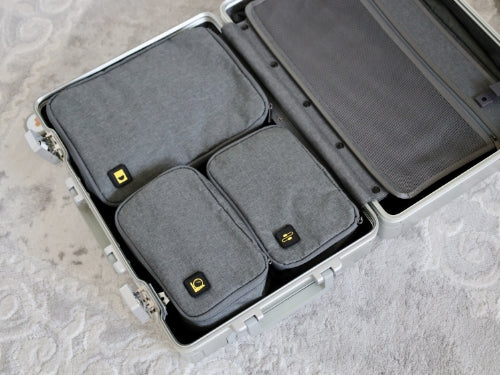
The LEVEL8 Hegent Carry-On illustrates this structure clearly. It combines a built-in aluminum frame with dual TSA-approved locks rather than asking the user to insert zipper pulls into one central lock. Before resetting a suitcase like this, open both latches and identify the reset control on each lock.
Do not assume both latches automatically share a code. If you want them to use the same combination, set one lock at a time and test each independently before closing the frame. The broader range of zipperless luggage also shows how latch placement and case construction can vary.
Hegent is an example of the closure type, not a universal instruction template. Use the directions supplied with the specific model because reset-button positions can change between locks.
What to Do If You Forgot the Combination
A locked suitcase generally cannot be reset without the current combination. That restriction prevents someone else from changing the code and opening the bag.
Begin with the least invasive checks. Make sure the wheels are centered, remove pressure from the lid or zipper pulls, and try 0-0-0 if the code may never have been changed. Then test a small number of combinations you genuinely might have used and check your secure notes.
For a three-dial lock that you own, the codes range from 000 through 999. Testing them in numerical order avoids repeating guesses or leaving gaps. Work patiently and stop if the mechanism starts sticking.
If that does not restore access, contact the luggage manufacturer, the retailer, a luggage repair specialist, or a locksmith. Keep proof of ownership available. More detailed recovery options are covered in this guide to opening a luggage lock after forgetting the combination.
The keyhole beside a red Travel Sentry symbol does not provide a shortcut. It is intended for authorized security personnel. Their master key can open and relock compatible luggage for inspection, but it does not reveal your combination or place the lock into user-reset mode.
Avoid forcing open a zipper, prying apart the case, or dismantling the lock while traveling. Those actions can turn a recoverable code problem into damage to the shell, frame, or closure.

Why the Lock Will Not Reset or Open
A lock that rejects the expected code is not necessarily broken. Dial alignment, packing pressure, and an incomplete reset cause many apparent failures.
The Dials Are Not Centered
Look directly at the indicator line and move every digit into the center of its window. Turn each wheel one full position away and back again to make sure it has settled.
Small misalignment matters because the visible number is connected to an internal wheel. When that wheel stops between positions, the correct code may still fail to release the latch.
The Zipper Pulls or Lid Are Under Pressure
A tightly packed bag can pull against the zipper heads or push outward on a frame latch. Press down gently on the lid, or move the zipper pulls toward the lock, while operating the release.
Use only enough pressure to unload the latch. If you have to twist the button or bend the zipper pulls, stop and repack the case after opening it.
The Reset Button Is Stuck
Do not continue changing the number wheels when a reset button remains depressed. First try returning the dials to the previous code, then operate the release button gently to see whether the setting mechanism returns to its normal position.
A pin or switch that will not move back may indicate an incomplete reset or internal damage. A repair professional is safer than enlarging the pinhole or levering the button with a sharp tool.
The New Code Was Not Saved
While the case remains open, try both the old and intended combinations. If the old code works, the reset control probably never entered setting mode. Repeat the procedure and make sure the button is fully depressed or the switch reaches its complete setting position.
If neither code works, leave the suitcase open. Do not insert the zipper pulls or close the frame latches while troubleshooting.
How to Avoid Lock Problems Next Time
Record a new code immediately in a secure place. Memory becomes less reliable when a combination is changed hurriedly before a flight, especially if several suitcases use different numbers.
Test the lock before every trip and watch for dials that resist turning, a release button that does not spring back, or a latch that requires increasing force. These warning signs are easier to address at home than at an airport.
Set or change the code while the suitcase is empty or lightly packed. An overfilled case can place tension on the closure and make it difficult to tell whether the combination or the physical load is causing the problem.
If another person will use the luggage, explain the correct opening method and share the code securely. Accidental pressure on the reset button while the wheels are moving can result in an unintended combination.
Conclusion
If you know the current code, open the suitcase, identify its reset mechanism, set the new combination, and test it several times before securing the zipper pulls or frame latches.
If you have forgotten the code, resetting is usually not the first step because most locks must already be open. Check dial alignment, release pressure on the closure, try the factory code when appropriate, and use the manufacturer or a professional repair service if access cannot be restored safely.
The exact controls differ among recessed-button locks, slider locks, padlocks, and dual-latch zipperless cases. A model-specific instruction manual should take priority over any general procedure.
Frequently Asked Questions
Is 0-0-0 the default code for every luggage lock?
No. It is a common factory combination, but it is not universal. Check the product instructions before assuming the default code.
Why does a TSA lock have a keyhole if no key is included?
The keyhole allows authorized security personnel to inspect and relock compatible luggage. The traveler normally uses the combination rather than receiving a master key.
Can airport security reset my luggage combination?
Generally, no. Authorized personnel may open a compatible TSA lock for inspection, but their key does not disclose or reset the owner’s combination.
Why will my suitcase not open when the code is correct?
The digits may be misaligned, or pressure from an overpacked case may be loading the latch. Center the wheels and gently relieve pressure on the zipper pulls or lid before trying again.
Should I reset both locks separately on a zipperless suitcase?
If the suitcase has two independent combination latches, set and test each one separately. Even when both use the same code, do not assume changing one automatically changes the other.

reset locker
Leave a comment