



Table of Content
Best Luggage Material: How to Choose the Right Suitcase

A suitcase may look sturdy in a product photo, but its shell or fabric determines how it responds when dropped, squeezed, or lifted into an overhead bin. For most travellers, polycarbonate is the best luggage material overall because it balances impact resistance, manageable weight, and price. Polypropylene may be more practical when low weight comes first, aluminium offers a more rigid structure, and durable nylon gives soft-sided luggage greater flexibility. The right choice depends on what you pack, whether you carry on or check the case, and how often you travel.
Best Hard-Shell Luggage Materials Compared
Hard-shell materials protect belongings differently. Polycarbonate absorbs impact by flexing, aluminium relies on a rigid structure, and lighter plastics reduce empty weight. This matters more than simply finding the hardest shell.
Polycarbonate: Best Overall Balance
Polycarbonate is strong without being completely rigid. When compressed or struck, it can flex and return towards its original shape, reducing the brittle cracking associated with lower-cost plastics. It suits travellers who want more protection than basic ABS without accepting the weight of full aluminium luggage. It usually costs more than ABS or polypropylene, and glossy finishes can show scratches. Thickness and construction still matter because two shells carrying the same material label may perform differently.
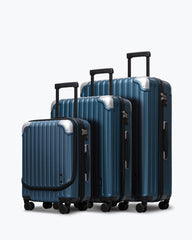
The Hegent Carry-On Luggage 20'' pairs a German-made Makrolon polycarbonate exterior with an aluminium-magnesium frame and metal corner guards. The shell absorbs everyday knocks, while the frame stabilises the zipperless opening. Its 10 lb weight and 38 L capacity make it more relevant to travellers prioritising structure than the lowest possible carry-on weight.
Polypropylene: Best for Keeping Luggage Weight Down
Polypropylene has a lower density than other common hard-shell plastics, leaving more baggage allowance for the contents. This helps on routes where cabin bags are weighed. The trade-off is a softer feel. It bends more than polycarbonate and may show scratches, although that flexibility helps it tolerate routine pressure.
ABS: Best for Occasional and Budget Travel
ABS is used in affordable suitcases because it is light, rigid, and easy to mould into different finishes. It can be sufficient for holidays taken once or twice a year, especially when handled carefully. Under repeated heavy impacts, however, it is generally more likely to crack than polycarbonate. The differences between ABS and polycarbonate luggage become most relevant when deciding whether a lower purchase price is worth the trade-off in frequent checked use.
PC/ABS Blends: A Mid-Range Compromise
A PC/ABS label means the two plastics have been combined to balance cost, weight, and strength. It may improve on basic ABS without reaching the price of a full polycarbonate shell. The label does not reveal the proportion or placement of each material, so check the complete composition before treating "made with polycarbonate" as equivalent to 100% polycarbonate.
Aluminium: Best for Rigidity and Premium Construction
Aluminium does not flex back like polycarbonate. Its rigid shell and frame maintain a stable structure around belongings that should not be compressed, and aluminium cases commonly use latch closures instead of conventional zips. The compromises are higher weight, higher cost, and visible dents. A shallow dent may be cosmetic, but a distorted frame can prevent the case from closing correctly.
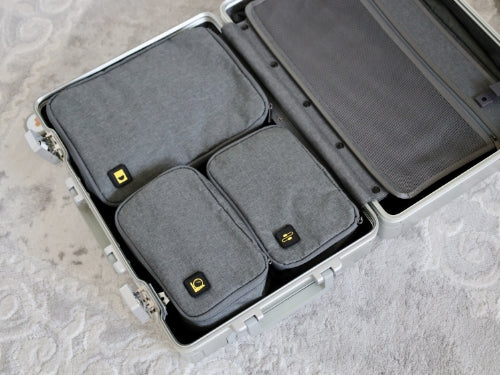
The Gibraltar Aluminum Carry-On Luggage uses an aerospace-grade aluminium-magnesium alloy body with two TSA-approved locks. It fits travellers who prioritise a rigid zipperless structure and accept more empty weight than a plastic suitcase.
Travellers who prefer exterior pockets, a compressible body, or more flexible packing should also consider modern soft-sided materials.

Best Soft-Sided Luggage Materials Compared
Soft-sided luggage exchanges a fixed outer shell for flexible packing and easier access. Many designs also include front pockets. The decision involves more than hard versus soft luggage; the fabric must also handle the expected abrasion and strain.
Ballistic Nylon: Best for Frequent Soft-Sided Use
Ballistic nylon uses a dense weave that resists tearing and abrasion. It can tolerate repeated contact with overhead bins, vehicle boots, and baggage racks without the cracking risk of rigid plastic. Its dense construction adds weight and cost, and colour choices may be limited. In return, frequent travellers gain exterior organisation and a body that can accommodate irregular loads.
Cordura Nylon: Best for Abrasion-Prone Travel
Cordura resists scuffs and surface wear, making it relevant to journeys involving trains, pavement, luggage racks, and frequent handling. It also tends to offer more colour and texture options than ballistic nylon. Abrasion resistance is only one measure, however. Seam quality and reinforcement still determine whether the travel bag can tolerate overpacking and repeated pulling.
Polyester: Best for Affordable, Lightweight Luggage
Polyester is common in lower-priced suitcases, carry-on bags, and luggage sets. It is light, quick to dry, and available in many finishes. A coated fabric can resist light rain, but quality varies substantially. Denier indicates fibre thickness, not the strength of seams, backing, or coating. Basic polyester is more likely than premium nylon to fray after frequent use, so it generally fits occasional trips better than weekly travel.
Leather and canvas are more common in weekender bags and duffels. Leather adds weight and needs moisture protection, while untreated canvas can absorb water.
Once the material families are clear, the next step is to match their strengths to the way the luggage will actually be used.
Best Luggage Material for Different Travel Needs
The same traveller may need different materials for different trips. A carry-on that is lifted repeatedly faces different demands from a large checked case moving through a baggage system, so start with the journey.
Carry-On Travel With Strict Weight Limits
For cabin travel, empty weight affects packing allowance and lifting. Polypropylene helps when every pound matters, while polycarbonate adds firmer protection for electronics. Polyester or nylon may be preferable when exterior pockets and compression matter more than a rigid shell.
When comparing carry-on luggage, check the complete dimensions, including wheels and handles, and the empty weight. Material cannot compensate for a case that exceeds the airline's current allowance.
Checked Luggage and Rough Baggage Handling
Checked bags face drops, stacking pressure, and conveyor belts. Polycarbonate resists impact without the weight of full aluminium, while aluminium creates a more rigid enclosure. Ballistic nylon handles abrasion but cannot form the same fixed barrier around fragile objects.
Surface scratches and shallow dents may not affect use. Cracks, separated seams, distorted frames, damaged corners, or a misaligned closure are more meaningful signs of compromised protection.
Frequent Business and International Travel
Frequent travellers should balance durability against handling effort. Polycarbonate offers structure at a manageable weight, ballistic nylon adds exterior organisation, and aluminium prioritises a rigid body and latch closure.
Clothing tolerates compression, while cameras, samples, or presentation equipment may benefit from a firmer enclosure and padding. No shell replaces proper organisation around a delicate item.
Occasional Trips and Budget Luggage Sets
ABS and polyester can be sensible when a suitcase is used only a few times a year and stored carefully.
For luggage sets, check whether every size uses the same shell, wheels, handle, and closure. Each piece should match trips you take; three sizes are not better value if one remains unused.
Next, examine how the entire case is built. A good material cannot compensate for weak wheels, an unstable handle, or an unreliable closure.

How to Judge Luggage Quality Beyond the Material
Material is only one part of durability. Two polycarbonate suitcases can perform differently because of shell thickness, frame design, and component quality.
Check Whether the Shell Is Full Material or a Blend
Look for wording such as 100% polycarbonate, PC/ABS blend, polypropylene, or a named textile. "Premium hard shell" reveals little. For soft luggage, consider fabric type and denier with coating, backing, and reinforcement. A high number cannot compensate for poorly stitched stress points.
Inspect the Wheels, Handles, Corners, and Closure
Many failures begin away from the centre of the shell. Check the wheel housings, telescopic handle, corners, and zipper track. On framed cases, close every latch and confirm the edges align. These checks matter more on large checked luggage because extra capacity increases component loads.
Compare Empty Weight, Warranty, and Repairability
Judge the complete suitcase rather than the shell alone. A light material can still become heavy once a frame, locks, dividers, and reinforced hardware are added. Compare the final weight with airline limits and what you can lift comfortably.
A useful warranty should identify the parts it covers. Replaceable wheels, handles, or locks may extend a case's life more than a tougher shell alone. Hard shells are easy to wipe, while fabrics may need vacuuming and spot treatment.
Conclusion
Polycarbonate is the best luggage material for many frequent travellers because it offers a strong balance of impact resistance, weight, and price. Choose polypropylene when low empty weight is the priority, aluminium when rigid framed construction matters more, and ballistic nylon or Cordura when flexible packing and abrasion resistance are central. ABS and polyester remain practical for occasional travel on a tighter budget. Whatever the material, check the complete suitcase, including its wheels, handle, closure, weight, and repair options, before deciding which one deserves space on your next trip.
FAQ
Are PC/ABS suitcases the same as 100% polycarbonate luggage?
No. PC/ABS combines the plastics or uses them in separate layers. Performance depends on their proportion and construction. A product should explicitly state 100% polycarbonate if the whole shell uses it.
Does a thicker hard shell always mean a more durable suitcase?
Not necessarily. Material quality, moulding, frame support, and reinforced stress points also affect durability. Extra thickness may add weight without improving the wheels or handle.
Are scratches or dents signs that luggage is no longer safe to use?
Minor cosmetic marks do not automatically affect protection. Repair or replace luggage with a spreading crack, exposed sharp edge, distorted frame, separated seam, loose wheel housing, or failed closure.
Is a higher denier always better for soft-sided luggage?
No. Denier describes fibre thickness, not complete bag quality. Fabric type, weave, coating, stitching, backing, and reinforcement also matter.
Which luggage material is easiest to clean and maintain?
Polycarbonate, polypropylene, ABS, and aluminium are usually easiest to wipe clean. Nylon and polyester may trap dust and need vacuuming or spot cleaning. Follow the care instructions for the specific finish.
Leave a comment