



Table of Content
Best 30-Inch Luggage: 5 Large Checked Bags for Long Trips in 2026

The best 30-inch luggage gives you enough room for an extended trip without becoming unmanageable at the airport. That balance is harder to find than it sounds: a large suitcase may hold two weeks of clothing, yet its empty weight and exterior dimensions can leave little margin before airline fees apply.
For flat, unobstructed packing, the LEVEL8 Voyageur is a strong choice. The Travelpro Maxlite 5 emphasizes low weight, while the Briggs & Riley ZDX focuses on premium construction and long-term repair coverage. Before choosing, remember that “30-inch” is a product category, not an airline standard. Always check the full dimensions, including wheels and handles.
Best 30-Inch Luggage for 2026
These five suitcases approach large-capacity travel differently. The table highlights the practical tradeoffs before we examine how each one handles packing, movement, and repeated check-in use.
|
Product |
Best For |
Overall Dimensions |
Empty Weight |
Capacity |
Construction |
Expandable |
|
LEVEL8 Voyageur 30-Inch |
Flat packing space |
32.1 × 16.7 × 13.3 in |
13.9 lb |
105 L |
Polycarbonate |
No |
|
Travelpro Maxlite 5 Large Spinner |
Low empty weight |
31 × 21 × 13 in |
8 lb |
142 L |
Softside |
Yes |
|
Samsonite Outline Pro Large Spinner |
Organized packing |
31 × 21 × 13.8 in* |
10.1 lb |
Not listed |
Polypropylene |
Yes |
|
DELSEY Chatelet Air 2.0 30-Inch |
Style and compartmentalization |
30 × 20.75 × 12.75 in |
11.1 lb |
110 L interior |
Polycarbonate |
Varies by version |
|
Briggs & Riley ZDX Large 30-Inch |
Premium warranty coverage |
29.5 × 19.75 × 12–14.25 in |
12.6 lb |
107.8–128 L |
Polycarbonate |
Yes |
LEVEL8 Voyageur 30-Inch — Best for Flat, Unobstructed Packing
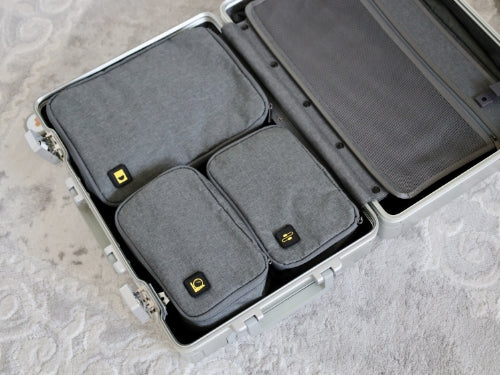
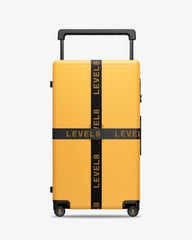
The LEVEL8 Voyageur 30-Inch earns its place through its wide-handle architecture. Traditional telescoping handles create two raised channels inside a suitcase; moving the handle toward the outer edges produces a flatter base for packing cubes, folded trousers, shoe boxes, and other rectangular items.
Its 105 L capacity suits trips of ten days or longer, while the Makrolon polycarbonate shell provides rigid protection for items that should not be compressed. Interior compression and a wet-dry pocket make it easier to separate worn clothing or toiletries from the main load. Four spinner wheels also help when moving a fully packed case through an airport, although no wheel system eliminates the effort required to lift a large suitcase into a car.
The main compromise is its 13.9 lb empty weight. Under a 50 lb allowance, that leaves roughly 36 lb for everything inside. Its listed exterior dimensions also total slightly more than 62 linear inches, so checking the operating airline’s policy is essential.
Best for: Travelers who value a tidy, level packing surface and regularly carry structured clothing, packing cubes, or bulky rectangular items.
Travelpro Maxlite 5 Large Spinner — Best Lightweight 30-Inch Luggage
At approximately 8 lb, the Travelpro Maxlite 5 Large Spinner leaves considerably more of an airline weight allowance available for clothing and gear. That matters when boots, winter layers, books, or souvenirs add weight more quickly than expected.
The softside body offers 142 L of stated capacity and can expand for an even larger load. Fabric construction also gives the case some flexibility when you need to fit an awkward item near an edge. The tradeoff is reduced structural rigidity compared with a hard shell, especially when the suitcase is not completely filled.
Its 31 × 21 × 13-inch overall measurements total well over the common 62-linear-inch threshold before expansion. The generous volume is useful for road trips, cruises, relocation, or airline itineraries with suitable allowances, but filling it completely can make both weight and dimensions difficult to manage.
Best for: Travelers who want maximum capacity with a low starting weight and prefer the flexibility of a softside suitcase.
Samsonite Outline Pro Large Spinner — Best for Organized Packing
The Samsonite Outline Pro is designed for travelers who prefer built-in organization over one undivided compartment. Its KompressPak panel holds folded clothing in position, while a separate WetPak pocket keeps a damp swimsuit or a leaking toiletry pouch away from clean garments.
The polypropylene shell flexes more readily than a rigid polycarbonate case, which can help it absorb routine handling without adding excessive weight. At 10.1 lb, it sits between the lightweight Travelpro and heavier premium models. Dual spinner wheels and an adjustable telescoping handle make the large body easier to guide beside you rather than drag behind you.
Opening the 1.5-inch expansion zipper creates extra room for the return journey, but it also increases the case’s depth. Since the listed dimensions already exceed the common 62-linear-inch standard, expansion is best reserved for trips where oversize restrictions are not a concern.
Best for: Families and vacationers who want dedicated areas for folded clothes, small belongings, and damp items.
DELSEY Chatelet Air 2.0 30-Inch — Best for Style and Interior Organization
The DELSEY Chatelet Air 2.0 combines a distinctive exterior with a practical two-compartment interior. A divider, securing straps, shoe bag, laundry bag, and smaller pockets prevent a large load from collapsing into one untidy pile during transit.
Its 110 L interior capacity provides room for trips of two weeks or more. The 11.1 lb empty weight is manageable for a large polycarbonate case, although travelers packing heavy footwear or toiletries should still use a luggage scale. Dual-density spinner wheels are intended to produce a smoother, quieter roll on airport tile and hotel floors.
The standard 30-inch model measures 63.5 linear inches based on its listed exterior dimensions. DELSEY also sells an expandable anniversary version with different specifications, so shoppers should verify which model they are viewing rather than assuming all Chatelet Air 2.0 cases are identical.
Best for: Travelers who want a polished hard-shell suitcase with detailed interior organization for longer vacations.
Briggs & Riley ZDX Large 30-Inch — Best Premium Pick
The Briggs & Riley ZDX is the premium choice for frequent travelers who place a high value on repair support. Its lifetime guarantee covers qualifying functional damage, including damage caused by an airline, which may make the higher initial cost easier to justify for someone who checks a bag regularly.
The polycarbonate case holds 107.8 L in its standard form and expands to approximately 128 L. Compression panels secure clothing after packing, while a tracker pocket provides a discreet place for a compatible locating device. The unexpanded dimensions total 61.25 linear inches, but opening the expansion zipper can take the case beyond the common 62-inch limit.
At 12.6 lb, it is not the best option for anyone whose main goal is minimizing empty weight. Its appeal lies in the combination of a flatter packing layout, expandable capacity, premium hardware, and long-term repair coverage.
Best for: Frequent flyers who want a premium checked suitcase and expect to keep repairing and using it for many years.

Is a 30-Inch Suitcase the Right Size for Your Trip?
A 30-inch suitcase is best suited to long vacations, winter travel, family packing, and trips that involve bulky equipment. It is always checked luggage; it cannot function as a conventional carry-on.
Trip length alone does not determine whether you need this much space. One person packing lightweight summer clothing for two weeks may be comfortable with a 26- or 28-inch case. Two people sharing one suitcase, or a traveler carrying coats and boots, can use the extra depth much more effectively.
Large cases also create practical problems away from the baggage counter. Two 30-inch suitcases may consume most of a compact car’s cargo space, while a 50 lb case can be difficult to lift up stairs or onto a luggage rack. If you are still deciding between large sizes, this large checked suitcase guide explains where medium and extra-large cases fit into different journeys.
Travelers who regularly need this capacity can compare the broader range of checked luggage, including options that are easier to manage than a full 30-inch model.
How to Choose a Large Checked Suitcase
Once you know that you need a large case, capacity should not be the only deciding number. Empty weight, internal geometry, materials, and lifting points have a greater effect on day-to-day use than a small difference in liters.
Balance Capacity Against Empty Weight
Subtract the empty suitcase weight from your airline’s packed-bag allowance. A 13.9 lb suitcase leaves about 36.1 lb under a 50 lb limit; an 8 lb model leaves about 42 lb.
That six-pound difference can represent several pairs of shoes or a substantial amount of winter clothing. Capacity is more useful for light but bulky items, while dense belongings can push a half-empty suitcase over the weight limit. Weigh the finished case at home instead of estimating by how full it looks.
Match the Interior Layout to What You Pack
A conventional clamshell divides belongings into two shallow halves. This keeps categories separate but requires enough floor or bed space to open the entire case. A deep single compartment is better for bulky items, though smaller belongings may need packing cubes to prevent shifting.
A wide-handle system reduces rails and bumps inside the case, creating a more regular surface. Another space-efficient option is top-opening luggage, which opens into a deep compartment without spreading two equal halves across the floor. That layout can be useful in compact hotel rooms, cruise cabins, and multi-stop itineraries.
Choose the Shell for Your Handling Priorities
Polycarbonate offers a useful combination of rigidity and impact flexibility, making it popular for repeatedly checked hard-shell luggage. Polypropylene can be lighter and more flexible, while softside polyester or nylon makes it easier to use pockets and accommodate irregular loads.
No shell is immune to scuffs, punctures, broken hardware, or severe impact. Focus on the complete suitcase: zippers, corner construction, handle attachment points, wheel housings, and warranty terms matter alongside the main material. Travelers comparing the broader category can browse LEVEL8’s luggage options by size and packing style.
Consider Wheels, Handles, and Lifting Points
Four spinner wheels reduce the effort needed to guide a heavy case across smooth terminal floors. Larger or double wheels may feel more stable over thresholds, but product specifications alone cannot guarantee quiet performance on rough pavement.
Check for top and side carry handles because rolling stops when you reach stairs, a car trunk, or a hotel luggage rack. A bottom grip is particularly helpful on a 30-inch suitcase: one person can hold the top while another supports the base rather than pulling on the wheels or telescoping handle.

Check Airline Limits Before You Pack
Airlines generally measure the complete exterior of checked luggage. Add the longest height, width, and depth, including wheels, fixed handles, pockets, and any expansion.
Many major U.S. airlines use 62 linear inches and 50 lb as their standard economy checked-bag limits. Those figures are planning references, not universal rules. Low-cost carriers, international airlines, premium cabins, routes, and loyalty benefits may apply different allowances. The current airline luggage size and weight guide provides a fuller comparison.
Measure the suitcase again after packing because softside walls and expansion panels can change its depth. Then weigh it with a digital luggage scale. If an itinerary involves multiple airlines, check the operating carrier for each segment and plan around the strictest applicable rule.
Conclusion
Choose the LEVEL8 Voyageur when a flat packing base and structured hard-shell protection matter more than minimum empty weight. The Travelpro Maxlite 5 is better for travelers who want to preserve as much of their weight allowance as possible, while the Samsonite Outline Pro and DELSEY Chatelet Air 2.0 suit people who prefer built-in organization.
The Briggs & Riley ZDX makes the most sense for frequent travelers willing to pay more for premium construction and long-term repair support. Whichever case you choose, compare its full exterior dimensions with your airline rules before purchasing. A suitcase can offer excellent capacity and still be unsuitable for a tightly restricted itinerary.
Frequently Asked Questions
Can a 30-inch suitcase be used as a carry-on?
No. A 30-inch suitcase is designed to be checked. Common carry-on limits are around 22 × 14 × 9 inches, although the exact allowance varies by airline.
How many days of clothing fit in 30-inch luggage?
A 30-inch suitcase commonly holds enough clothing for roughly two weeks or longer. The actual duration depends on clothing thickness, shoes, packing method, access to laundry, and whether more than one person uses the case.
Is a 30-inch suitcase too large for international flights?
Not automatically, but many 30-inch cases exceed standard checked-bag limits once their width, depth, wheels, and handles are included. Check the operating airline’s linear-dimension and weight rules before flying.
Do suitcase measurements include wheels and handles?
Airline measurements generally include wheels, handles, pockets, and other fixed external parts. Product listings may distinguish between case dimensions and overall dimensions, so use the overall figure for compliance checks.
Is a 30-inch hardside suitcase heavier than a softside model?
Often, but not always. Shell material, frame construction, wheels, handles, and internal hardware all influence weight. Compare the listed empty weight of individual models instead of relying on shell type alone.
Leave a comment